What is Freelance Platform Income and Why It’s Different [2026]
Part 1

- What is Freelance Platform Income?
- How Platform Income Differs from Traditional Employment
- How Freelance Platform Income Differs from Traditional Freelancing
- The Platform Income Spectrum: Where Do You Fit?
- Why Traditional Tax Advice Fails Freelance Platform Income Earners
- The Platform Economy is Growing (And Tax Systems Are Catching Up)
- What You Need to Know Next
- Start Calculating Your Platform Income Taxes Today
If you’re earning money through Upwork, YouTube, Etsy, or Uber, you’re part of the platform economy. But when tax season arrives, you quickly realize that freelance platform income doesn’t fit the rules designed for traditional employment or even conventional freelancing. Understanding what makes platform income unique is the first step toward managing your taxes correctly.
What is Freelance Platform Income?
Freelance platform income is money earned through digital platforms that act as intermediaries between you and your customers or audience. The platform controls payment terms, processing, and often takes a percentage before you see any money.
Key characteristic: You don’t directly invoice clients or control when and how you’re paid—the platform does.
Examples of Platform Income:
- YouTube ad revenue from content you create
- Upwork project payments from clients who hire you
- Etsy sales from products you sell
- Uber earnings from rides you complete
- Medium Partner Program payments from articles you write
- Patreon subscriptions from supporters
- TikTok Creator Fund payments based on video views
The common thread? A digital platform sits between you and the money, managing the transaction, taking fees, and determining payment schedules.
How Platform Income Differs from Traditional Employment
Traditional employment is straightforward for taxes:
Traditional Employment:
- ✅ Employer withholds taxes from every paycheck
- ✅ You receive annual tax statements showing your earnings
- ✅ Consistent payment amounts and schedules
- ✅ Single income source
- ✅ Benefits often included (healthcare, pension)
- ✅ File taxes once a year, often receive a refund
Freelance platform income flips every assumption:
- ❌ No tax withholding (you’re responsible for everything)
- ❌ Tax documentation varies by platform and country (many provide nothing at all)
- ❌ Wildly irregular payments ($500 one month, $5,000 the next)
- ❌ Multiple income sources across different platforms
- ❌ No benefits (you pay for everything yourself)
- ❌ Quarterly estimated payments required in most countries
The biggest shock: That $5,000 payment from a platform isn’t $5,000 you can spend. You might owe 25-35% in taxes, meaning your actual take-home is $3,250-$3,750.
Many new platform earners learn this the hard way when they receive a tax bill for thousands with no savings to pay it.
How Freelance Platform Income Differs from Traditional Freelancing
“Isn’t platform work just freelancing?” Not quite.
Traditional Freelancing:
- You find clients directly (networking, referrals, cold outreach)
- You set your own rates and negotiate payment terms
- You invoice clients directly (via email, QuickBooks, etc.)
- You control when payments arrive (NET-30, NET-60, etc.)
- Clients pay you directly (bank transfer, check, PayPal)
Platform-Based Freelancing:
- Platform connects you with clients (Upwork, Fiverr algorithm)
- Platform influences pricing (suggested rates, bidding systems)
- Platform handles all invoicing automatically
- Platform controls payment timing (held for 14 days, released on monthly schedule)
- Platform processes payment and takes 10-20% fee before paying you
Tax implication: Traditional freelancers track client payments directly. Platform freelancers must track:
- Multiple platforms with different fee structures
- Bundled payment types (Upwork combines multiple project payments)
- Platform fees already deducted (affects how you report income)
- Different currencies if working with international clients through platforms
Freelance platform income adds layers of complexity that traditional freelancing never had.
The Platform Income Spectrum: Where Do You Fit?
Not all freelance platform income is the same. Understanding where you fall on the spectrum helps you anticipate your specific tax challenges.
1. Gig Work (Task-Based)
Examples: Uber, DoorDash, TaskRabbit, Bolt
Characteristics:
- Per-task payment (per ride, per delivery, per job)
- Little control over pricing
- Platform assigns work to you
- High volume, low individual transaction amounts
Tax considerations:
- Often treated as self-employment
- Significant vehicle or equipment deductions
- Tips may be paid separately (still taxable)
- Mileage tracking critical
2. Service-Based Freelancing
Examples: Upwork, Fiverr, Toptal, Freelancer.com
Characteristics:
- Project-based or hourly work
- You set rates (within platform guidelines)
- Clients choose you based on proposals or portfolio
- Platform takes 10-20% commission
Tax considerations:
- Service income (not product sales)
- Software subscriptions and professional development deductible
- Platform fees already deducted from payments
- Client management and communication tools deductible
3. Content Creation (Audience-Based)
Examples: YouTube, TikTok, Twitch, Medium, Substack
Characteristics:
- Multiple revenue streams bundled (ads, memberships, tips, bonuses)
- Income tied to views, engagement, audience size
- Highly unpredictable month-to-month
- Platform controls monetization algorithms
Tax considerations:
- Most complex due to bundled payment types
- Equipment and production costs fully deductible
- Often paid in USD regardless of your location
- Sponsorships may be paid outside platform (separate tracking needed)
4. E-commerce & Digital Products
Examples: Etsy, Shopify, Gumroad, Amazon FBA, Redbubble
Characteristics:
- Product sales (physical or digital)
- Inventory considerations (if physical products)
- Shipping logistics (if applicable)
- Platform may collect taxes on your behalf (VAT, sales tax)
Tax considerations:
- Cost of goods sold reduces taxable income
- Inventory management affects tax timing
- VAT/sales tax complexity (collected but you may still have obligations)
- Marketing and advertising costs significant
5. Hybrid Models (Multiple Types)
Example: YouTuber who also sells courses on Teachable, offers consulting via Upwork, and sells merchandise on Etsy
Characteristics:
- Income from multiple platforms across different categories
- Each stream has different tax treatment
- Highest administrative complexity
Tax considerations:
- Must track each stream separately
- Different deduction opportunities per income type
- Business structure becomes critical at this scale
- Often requires professional accounting help
Most successful platform earners eventually become hybrid models. Understanding each type helps you anticipate tax complexity as you scale.
Why Traditional Tax Advice Fails Freelance Platform Income Earners
Your accountant uncle’s advice about “keeping receipts” and “making quarterly payments” isn’t wrong—it’s just incomplete for freelance platform income.
Traditional tax advice assumes:
- One employer or a few clients
- Consistent payment amounts
- Direct invoicing and payment
- Income in your home currency
- Annual tax forms provided
Platform income reality:
- 3-7 different platforms simultaneously
- Payments ranging from $50 to $5,000 unpredictably
- No invoicing (platform handles everything)
- Income in foreign currencies (USD, GBP, EUR, NGN, etc.
- Many platforms issue no tax forms (you’re still responsible for reporting)
The advice gap: Traditional tax guidance doesn’t address:
- How to aggregate income across multiple platforms
- How to handle multi-currency conversions correctly
- Whether platform fees are deductible expenses or income reductions
- How to track bundled payment types (YouTube combining ad revenue + memberships + Super Chats)
- Which business structure makes sense at different income thresholds
This is why platform earners need specialized knowledge—the tax rules haven’t changed, but the income complexity has multiplied.
The Platform Economy is Growing (And Tax Systems Are Catching Up)
Global platform economy statistics (2025-2026):
- Over 150 million people worldwide earn platform income
- Platform economy represents $500+ billion in global transactions
- Average platform earner uses 2.8 platforms simultaneously
- 40% of platform earners earn from multiple countries’ platforms
Tax authority response:
- OECD developing Model Rules for Platform Reporting
- Reporting thresholds dropping globally (many countries implementing lower thresholds or mandatory platform reporting)
- Increased cross-border data sharing
- Platform reporting mandates expanding globally
What this means for you: Tax authorities are getting better at tracking freelance platform income. They receive data directly from platforms even if you don’t receive tax forms. Accurate tracking and reporting isn’t optional—it’s essential.
What You Need to Know Next
Understanding what freelance platform income is and why it’s different is step one. But knowing your income is complex doesn’t help you manage it.
Next in this series:
Part 2: Common Freelance Platform Income Tax Mistakes (And How to Avoid Them) Learn the 8 most expensive errors platform earners make—mistakes that cost thousands annually—and how to avoid each one.
Start Calculating Your Platform Income Taxes Today
Not sure what you’ll owe on your freelance platform income?
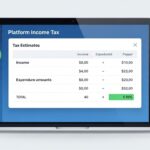
Use our free tax calculator to get an instant estimate based on your income, expenses, and country. No signup required. See exactly where you stand in 60 seconds.
Understanding your tax obligation is the first step toward managing it systematically.
About this series: This is Part 1 of our comprehensive guide to managing platform income taxes. Each article builds on the previous, taking you from understanding to implementation. By the end, you’ll have a complete system for tracking, calculating, and optimizing your platform income taxes.
Related: Best Platform Income Tax Software to Save Time & Stay Compliant – Compare tools designed for multi-platform earners.