The Future of Platform Income Taxes – [2026]
Part 4

- The Platform Economy Has Gone Mainstream
- Why 2026 Is the Inflection Point
- The AI Revolution: Earning More vs. Managing Taxes
- Why Traditional Solutions Are Two Steps Behind
- What the Next 3-5 Years Looks Like
- The Mindset Shift That Changes Everything
- The Solution: Purpose-Built for Platform Earners
- Join the Founder's Circle: Shape the Future of Platform Income Taxes
- The Choice You're Actually Making
- Start With Where You Stand Today
- The Series Wrap: From Understanding to Action
The way people earn has fundamentally changed. The way platform income taxes work hasn’t yet. But 2026 marks the turning point where tax systems globally begin catching up to how platform income earners actually work.
For the 435 million people earning through digital platforms worldwide, this shift brings both urgency and opportunity regarding their platform income taxes. The question isn’t whether to adapt it’s whether you’ll be ahead of the curve or scrambling to catch up.
The Platform Economy Has Gone Mainstream
From Niche to Normal
Ten years ago, earning money on YouTube, Upwork, or Etsy was considered a “side hustle”—extra income outside a “real job.” By 2026, that narrative is dead.
The numbers tell the story:
- 435 million people globally earn through digital platforms
- Platform economy transactions exceed $500 billion annually
- Average platform earner uses 2.8 platforms simultaneously
- 40% of platform earners report it as their primary income source
This isn’t the gig economy anymore. This is how modern work operates and with it comes the complexity of managing platform income taxes across multiple income currencies. You’re not an outlier—you’re part of the largest shift in employment structure since the Industrial Revolution.
What this means for taxes: Systems designed for single employers and lifetime careers are colliding with the reality of multi-platform, portfolio income. The friction you might be experiencing navigating platform income taxes isn’t a personal struggle, it’s a systemic lag.
The Professional Legitimization
Platform income is shedding its “side hustle” stigma:
Financial institutions are adapting:
- Mortgage lenders now accept platform income documentation
- Business banking products targeting platform earners
- Credit scoring models incorporating platform payment history
- Insurance products designed for independent workers
Professional infrastructure emerging:
- Business structure guidance specific to platform earners
- Tax professionals specializing in multi-platform income
- Legal frameworks recognizing platform work as legitimate profession
- Educational programs teaching platform income management
The shift happening right now: From “I do some gigs or side hustles” to “I’m a youtuber, content creator or influencer managing a business of one.”
Those who treat platform income professionally including proper tax management access opportunities closed to those still operating informally. The legitimization is happening. All of this hinges on one thing: properly managing platform income taxes as a professional, not an amateur.”The question is whether you’re positioned properly.
Why 2026 Is the Inflection Point
Global Regulatory Convergence
For years, platform income taxes existed in a reporting grey area. Platforms operated globally, but tax reporting and its systems was not recognised seperately. That disconnect is closing fast.
What’s changing globally:
- Platform reporting mandates expanding worldwide (OECD framework adopted by 140+ countries)
- Threshold reductions bringing more earners into formal reporting (many countries dropping from $20K to $5K or lower)
- Cross-border data sharing making international platform income visible to tax authorities
- Digital service taxation creating new obligations for platform earners serving foreign clients
2026 specifically: Multiple major jurisdictions implement new platform reporting requirements simultaneously. This isn’t gradual change, it’s coordinated global implementation. These changes make platform income taxes more visible and enforceable than ever before
What this means for you: The era of “I did not know or did not get a form, so I didn’t report” is over. Tax authorities now receive data directly from platforms. Your income is visible whether or not you receive forms. Compliance isn’t optional anymore—it’s tracked automatically.
The Compliance Window Is Closing
Early 2026: New rules take effect, but enforcement remains lenient (grace period for adaptation).
Mid-2026 onward: Automated systems start cross-referencing platform reports with tax filings. Discrepancies trigger notices, penalties, and audits.
The advantage of acting now: Get your platform income taxes compliant, whether estimated or actuals before enforcement ramps up. Penalties for 2026 income (filed in 2027) will be harsher than for 2025 income. Early movers avoid the stress and cost of catching up under pressure.
The cost of waiting: Owing back taxes plus penalties for multiple years while trying to reconstruct records from platforms that may not keep data accessible long-term.
This isn’t fear-mongering. This is the predictable result of tax authorities finally having the tools to match platform reports with individual filings at scale.
The AI Revolution: Earning More vs. Managing Taxes
AI Is Transforming How You Earn
60% of freelancers and platform earners now use AI tools to:
- Generate content ideas faster (YouTube creators using AI for script outlines)
- Complete service projects more efficiently (Upwork developers using AI coding assistants)
- Create product designs at scale (Etsy sellers using AI for mockups and variations)
- Optimize pricing and positioning (analyzing successful competitors)
AI isn’t replacing platform earners—it’s making them more competitive. The ones using AI thoughtfully are earning 30-50% more while working similar hours.
This matters for taxes because higher earnings mean:
- Crossing business structure thresholds (when upgrading from sole proprietor makes sense)
- More complex multi-currency income (AI makes global client work accessible)
- Greater compliance obligations (higher income = higher stakes)
Higher earnings mean platform income taxes become more complex and more critical to manage correctly
The platform earners thriving in 2026 aren’t avoiding AI—they’re using it strategically to increase income. But they’re not using it for tax calculations.
Why AI Can’t Handle Your Platform Income Taxes (Yet)
We covered this in Part 2, but it bears repeating: AI tools promising to “do your taxes” fail catastrophically on platform income taxes because:
- They’re trained on traditional employment (single employer)
- They don’t access official currency conversion rates
- They can’t parse platform-specific fee structures
- They miss bundled payment type breakdowns
- They have zero accountability when calculations are wrong
AI’s role in your tax workflow: ✅ Categorizing unclear expenses (“Is this equipment or supplies?”) ✅ Suggesting deductions you might have missed ✅ Explaining tax concepts in plain language
❌ Calculating multi-platform tax obligations ❌ Applying country-specific progressive tax rates ❌ Filing official returns
The future of platform income taxes isn’t AI replacing systems—it’s AI augmenting specialized tools built for platform income complexity. Think AI as assistant, not replacement.
Why Traditional Solutions Are Two Steps Behind
They Can Adapt, But Slowly
Generic accounting software (QuickBooks, FreshBooks, Xero) and traditional tax professionals can handle platform income. The problem? They’re reconfiguring for a world that’s already moved past them.
The lag cycle:
- Platform economy creates new income patterns (2015-2020)
- Early adopters struggle with tools designed for traditional freelancing (2018-2022)
- Software companies begin adding features for platform income (2023-2025)
- By the time features are mature, platform structures have evolved again (2026+)
Example: Accounting software added multi-currency support years ago—but it requires manual rate lookups and doesn’t distinguish between official government rates (required for tax reporting) and bank rates (what you actually received). It’s technically possible to use these tools, but it requires extensive workarounds.
Traditional tax professionals face similar lag: They’re trained on client-business relationships (invoicing, contracts, direct payments). Platform income flips the model (platform intermediary, bundled payments, automatic fees). Accountants can learn platform income—but most haven’t yet, and their $200-400/hour rates assume you’ll educate them on your specific platform mix.
The gap: Between when platform income complexity emerges and when mainstream solutions adapt fully. That gap is where specialized tools exist—built specifically for platform earners by people who understand the exact pain points because they’ve experienced them.
What the Next 3-5 Years Looks Like
Complexity Increases, Early Movers Win
Trends accelerating through 2030:
1. More platforms, more fragmentation
- Average platform earner will use 4-5 platforms (up from 2.8 today)
- Niche platforms emerging for specific skills/audiences
- Income more distributed, less concentrated in 1-2 sources
2. Regulatory sophistication
- Real-time reporting requirements (quarterly becomes monthly becomes real-time)
- Jurisdiction-specific rules for digital services proliferate
- Tax authorities using AI to match platform reports with filings automatically
3. Professional expectations rising
- Brands and clients expect platform earners to operate like businesses
- Proper accounting and tax compliance become baseline, not optional
- Access to opportunities (sponsorships, partnerships, financing) tied to professional operations
4. The divide widens
- Platform earners with systems scale smoothly (compliance is automatic, focus stays on earning)
- Those without systems hit breaking points (overwhelm, penalties, missed opportunities)
- The gap between “professionalized platform earners” and “informal side hustlers” becomes uncrossable
Who wins: Those who build proper systems NOW, before complexity overwhelms manual tracking and before enforcement penalties become expensive.
Who struggles: Those waiting until they “have time” or until it becomes “serious enough” to warrant attention. By then, they’re catching up under pressure with back taxes and penalties adding urgency.
The Opportunity Hidden in the Complexity
Here’s what most people miss: Platform income taxes becoming more complex creates an advantage for those who solve it early.
Why complexity is opportunity:
- Competitive moat: Proper compliance becomes a differentiator (brands work with professional operators)
- Financial access: Documentation quality unlocks business credit, mortgages, growth capital
- Peace of mind: Eliminating tax anxiety frees mental energy for earning and growth
- Compounding benefit: Time saved on tax admin = time spent building income, year after year
The platform earners earning $100K+ aren’t necessarily more talented. They’re more systematic. They solved operational complexity (including taxes) early, freeing them to focus on growth.
The Mindset Shift That Changes Everything
From Side Hustle to Business of One
The language you use about your platform income reveals how you approach it:
“Side hustle” mindset:
- “I just make some money on YouTube/Upwork/Etsy”
- Taxes are an afterthought, dealt with annually in panic
- No systems, just tracking what you remember
- Income feels bonus, not critical
“Business of one” mindset:
- “I’m a professional platform earner managing multiple income streams”
- Taxes are integrated into operations, handled ongoing
- Systems automate tracking, compliance, optimization
- Income is professional compensation, treated accordingly
The shift isn’t about ego—it’s about operations. Professionals have systems. Amateurs have intentions.
What changes when you adopt “business of one” mindset:
- You stop tolerating tools that “sort of work” and find solutions that actually fit
- You invest in systems that save time (because time = earning capacity)
- You treat tax compliance as business infrastructure, not personal burden
- You position yourself for opportunities that require professional documentation
The market rewards this shift: Brands pay more for professional platform earners. Financial institutions trust professional operations. Growth opportunities open to those with proper systems.
2026 is the year to make this shift—not because of regulation (though that’s real), but because the platform economy is maturing past the “informal” phase. Those still operating casually will find themselves increasingly left behind.
The Solution: Purpose-Built for Platform Earners
What Actually Works
You’ve read three parts explaining the problems. Part 4 isn’t about explaining more problems—it’s about showing you what the solution actually looks like.
A complete platform income tax system includes:
1. Automatic aggregation across platforms
- Income from YouTube, Upwork, Etsy, Fiverr, TikTok, Substack—all in one place
- No manual downloading, entering, or updating
- Real-time visibility into total income across sources
2. Intelligent currency conversion
- Official government exchange rates applied automatically
- Conversion on correct date (when payment received, not withdrawn)
- Documentation generated for tax reporting
3. Country-specific tax calculations
- Progressive tax rates applied accurately
- Business structure considerations built in
- Quarterly estimated payment calculations
- Real-time “what you owe” visibility as you earn
4. Compliance guidance integrated
- Filing deadlines by country
- Required forms and documentation
- Official resource links
- Regulation updates pushed to you automatically
5. Learning resources built in
- Platform-specific tax strategies
- Deduction optimization by income type
- Business structure decision frameworks
- Guides written for platform earners, not generic freelancers
This isn’t theoretical. This is what platform earners with proper systems use.
Why PlatformTaxHub Was Built
We built PlatformTaxHub because we experienced the exact pain you’re feeling:
- Generic accounting software that broke at multi-platform scale
- Accountants who didn’t understand bundled YouTube income or Upwork fee structures
- Spreadsheets that worked until they didn’t
- Tax season panic despite year-round tracking attempts
The insight: Platform income isn’t slightly different from traditional freelancing. It’s fundamentally different—and it needs purpose-built solutions.
PlatformTaxHub handles:
- ✅ 65+ platform integrations (Upwork, YouTube, Etsy, Fiverr, TikTok, Substack, and 59 more)
- ✅ Multi-currency income with automatic official rate conversion
- ✅ Country-specific tax calculations (US, UK, Nigeria live; 16 priority countries in development)
- ✅ Compliance dashboard with RAG scoring (Red/Amber/Green status across 8 areas)
- ✅ Learning Hub with platform-specific strategies
- ✅ Regulations tab with country-specific guidance and official links
What this means for you:
- 30 minutes monthly instead of 8-12 hours
- Confidence you’re tracking correctly
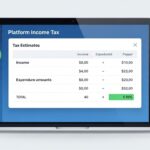
- Real-time tax estimates (know what you owe as you earn)
- Elimination of the tax anxiety that’s been background noise for years
Join the Founder’s Circle: Shape the Future of Platform Income Taxes
Here’s what most people don’t realize: The first 100 users of any platform are more than customers—they’re co-creators.
The Founder’s Circle (Limited to 100 Members):
What you get:
- ✅ Lock in rate of $149/year (standard price: $270/year after launch) for the first 3 years
- ✅ Early access to all features as they roll out
- ✅ Direct input on product roadmap (your needs shape development priorities)
- ✅ Priority support from founders who understand platform income
- ✅ Exclusive community of other professional platform earners
- ✅ First access to premium features and add-ons before public release
Why this matters: You’re not just buying software. You’re joining the movement of platform earners who decided to professionalize their operations ahead of the 2026 regulatory shift.
Why now? Because 2026 is the inflection point. Regulatory changes take effect. Enforcement begins. The platform economy professionalizes. Those with systems in place will thrive. Those without will scramble.
Join the Founder’s Circle – Only 100 Spots at $149/Year →
The Choice You’re Actually Making
This isn’t really about buying tax software. It’s about deciding what kind of platform earner you’re going to be.
Option 1: Stay where you are
- Continue manual tracking (8-12 hours monthly)
- Hope you’re doing it right (but never quite sure)
- Deal with tax anxiety year-round
- Scramble when 2026 enforcement begins
- Pay standard rates later when you finally can’t avoid it anymore
Option 2: Get ahead now
- Automate tracking (30 minutes monthly)
- Know with confidence you’re compliant
- Eliminate tax anxiety permanently
- Be positioned before enforcement ramps up
- Lock in Founder’s Circle pricing ($149 vs $588)
The gap between these options widens every month. The longer you wait, the more catch-up work you face. The sooner you systematize, the more time you gain back for earning and growth.
435 million people globally are earning through platforms. Most will continue struggling with tax complexity. A small percentage will solve it systematically and pull ahead.
Which group do you want to be in?
Start With Where You Stand Today
Before committing to any system, understand your current tax obligation.
Use our free tax calculator – Built for multi-platform earners. Input income from all your platforms, see country-specific estimates, understand what you should be setting aside. Takes 60 seconds. No signup required.
Then decide: Keep doing this manually, or let the system handle it automatically.
The Series Wrap: From Understanding to Action
Over four parts, we’ve covered:
Part 1: What is Freelance Platform Income – Understanding why it’s fundamentally different
Part 2: 7 Platform Tax Mistakes – Avoiding the errors that cost thousands
Part 3: Why Gig Economy Platform Taxes Feel Overwhelming – Validating the pain is real and structural
Part 4: The Future and the Solution – Where we’re headed and how to get ahead
You now have the complete picture. You understand the problem, the mistakes to avoid, why it feels impossible, and what the solution looks like.
The only thing left is the decision: Continue as you are, or join the 100 founding members who are building the future of professional platform income management.
Join the Founder’s Circle – $149/Year for the First 100 →
The future of platform income taxes is more complex, more enforced, and more critical to your success. But for those with the right systems, it’s also more manageable than ever.
The question is whether you’ll be ahead of the curve or scrambling to catch up.
About WorkflowEdge: We believe in logic first, AI helps. We build tools and resources that make complex business operations systematic and manageable for platform earners, creators, and independents worldwide. PlatformTaxHub is our answer to the platform income tax challenge—built by people who've lived it, for people currently struggling with it.